
Nonetheless, an Excerpt
Kyoko Uchida
————————-What do you know about Jerusalem.
————————-You don’t need to understand languages;
————————-they pass through everything as if through the ruins of
————————-houses.
————————-Yehuda Amichai, from Jerusalem 1967
They arrived into rain. This is how the story begins—the one she tells herself, keeps telling herself for years afterward. They arrived into a city of rain; then, many weeks later: light, unbearable light, and heat.
First, in January, the almond tree burst into bloom, an explosion of white but in slow motion, as though time had broken up into luminous fragments flying outward. No, to describe beauty as an explosion was obscene. She said to herself simply, beautiful. Language was a minefield, no, a ticking time bomb, no, no—would have been, if she could have spoken.
Later, she missed the language of not knowing.
For forty days and forty nights rain fell like blows, slicking the stone steps so she was afraid to walk. Cold seeped into stone and concrete, the interior walls icy to the touch under high ceilings built for summer heat. Each finger ached at the joints. What sunlight fell through the kitchen windows was yellow and gray, the color of old newspapers.
Yet as soon as the rains stopped, there was color, brilliant color, and everywhere at once: fits of cyclamens from palest pink to giddy maroon, a hummingbird outside the bedroom window in cobalt blue, flecked gold and ruby so saturated it looked artificial, a jeweled illusion. Perhaps it wasn’t real, neither the hummingbird nor the rose-pearl doves bobbing their tiny mechanical heads, nor the neat square of buttered light on the opposite wall.
*
Sometimes she talked nonstop to those who spoke her languages, or to the dog, the half-blind stray kittens stumbling under the kitchen window. Sometimes she did not speak for days, even when her husband was back from assignments. Warm weather brought in neighbors’ operatic complaints, the clatter of dishes and copper pots, cymbals in the music therapy class down the alleyway. Even the mid-day stillness held a buzz at its core: an insistent hum rising and falling over a strung wire.
And what was the urgent message she could not decode? She searched the faces of armed guards who examined her bag at the entrance of every supermarket, restaurant, office building, cinema; Orthodox men who stood waiting for her to get up from the bench; elderly women or black-clad families who crossed the street if she and the dog did not first; neighbors, shopkeepers, and taxi drivers who asked what she was doing there, in their city; Filipina women who stopped talking when she passed by.
She learned to smile and unzip her bag whenever she saw a gun. Yes, smile, but not too broadly, lest she attract suspicion or contempt. Just to say she knew the drill. She was told, It’s good that there’s a lot of security. She was told, It means you’re safe.
*
In fact, there was so much color it was oppressive. On every street the bloody hues of fuchsia and purple hibiscus pressed up against her skin with a physical weight, a kind of humid microweather. Her eyes smarted from the fever rash of scarlets and pinks, the white heat of geraniums—and from the spiked sun and limestone grit.
*
But your husband isn’t…is he? An American friend of an acquaintance, an aspiring historian, asked, unwilling even to say the word: Jewish. Guessing, she said, Yes, it just so happens that he is. Why do you ask? The friend and the acquaintance stared, then smiled, as at a child who’d just said something clever, then looked away—from her, from each other, perhaps each blaming the other for the error.
They were in Bethlehem, walking back to the crossing after visiting the church orphanage, along sidewalks chewed up by tanks in the last operation. All around them the rain-washed stones shone, second-story walls of corner buildings pocked with bullet holes. She was beginning to recognize them, to look for them. Inside each dent: a tiny pool of shade.
Perhaps they’d believed her to be one of them, a foreigner without connection, and it had turned out she was one of them, those who had ties, however tenuous, and therefore expected to have loyalties, and therefore suspect. It did not matter that the reason her husband had taken the three-year posting was unrelated to ancestry, that he had also applied to bureaus in Afghanistan, India, Hong Kong.
She’s studied the bitter history of this place, she told herself of the friend of the acquaintance, whom she had hoped to learn from but who would not speak to her again. She doesn’t know yet the myriad other histories, or the many-threaded narratives of people working together to right those wrongs. For wasn’t each of us poisoned from birth—by the lead dust in our very first breaths, the rust on keys to houses long ago razed, the raw onion against tear gas, the horror of another kind of gas, trace mercury in mother’s milk, the gnawing hunger of waiting to leave the camps, waiting to go home? Wasn’t each of us smothered with love as with a winding sheet?
*
The middle-aged man who stopped her on the corner had an awkward but kindly manner, like someone apologetically pointing out a dry cleaner’s tag on a stranger’s collar. Stepping out from under a shop awning as though he’d been waiting for her, he said, A worker? I’m looking for a worker. My wife, she is ill, and I need someone…. She must have looked surprised, for he immediately backed away, shaking his head and nodding at the same time: You don’t know. No, you don’t know.
What was it that she did not know? He used the verb to know as in to know the grammar, to know the answer, to know a woman—different from the verb to know as in to be acquainted with, to know someone, the city, the custom of the country. No, she did not know what she did not know. Presumably it was a domestic worker that he needed, a “helper,” but what was it he thought she ought to know? If he were asking, Do you know someone who could come work for me? he would have used the second verb to know, but he had not.
She stood there, wanting to be helpful, trying to read his mortified smile, until he turned and hurried up the side street. His shirt, while blindingly white, needed ironing.
Sometimes she herself was unknown: When she greeted her husband’s colleague who lived on the same street, he hurried past, mouth vaguely terrified, before she could remind him that they’d met before. A photographer from Jenin angrily denied ever having met before, even though they’d sat at the same table over a two-hour lunch just a month earlier. Others introduced themselves anew at each meeting, asked her to repeat her name the same number of times.
Sometimes she was unknown to herself: Strangers asked after families they claimed she worked for, were taken aback when she did not recognize them from places she’d never been. But you’re mistaken, a man who greeted her in front of the bakery insisted. I know who you are. She backed away, crushing the sunflower seed loaf against cold sweat, as passersby looked them over before striding on. But I know you, he shouted, pointing at her, I know you.
They were bewildering, these other selves she did not know. Bewildered, she felt wilder, beside herself, standing next to a copy of herself, invisible to herself. Sometimes she fled the scene, crossing against a red light to honks and what she assumed were curses—only to find herself still standing there, rooted to her shadow on the scarred sidewalk.
She would have liked to meet them, those other versions of herself with their multiple lives, trade stories about being mistaken for one another. But the live-in nurses and domestic workers she saw outside the coffee shop or at the post office or the park turned their heads in a studied pose of indifference. The nannies of foreign correspondents and UN and EU officials looked through her as if, by acknowledging them, by showing—even with the slightest smile—she saw them, she had insulted them. You are not one of us. Don’t you know your place?
*
It did seem that many of the expat women she met had babies or were expecting. She was often asked if she would like to hold their babies, which used to happen back home, too—her husband’s friends’ and cousins’ babies thrust into her arms. Though she loved watching an infant’s near-translucent eyelids fluttering or tiny fists clenching and unclenching, she had no desire to hold strangers’ children, the parents holding their breath. And why would the baby want to be passed around like a parcel?
It’s OK, go ahead, they would say. You don’t have to be afraid.
She wasn’t afraid of holding babies; she knew how. It was the mothers who were afraid to let her hold their babies. When she was five or six she’d often held her sister, fed her with a tiny plastic spoon, occasionally changed her diaper when her mother let her. It was what they said that disturbed her: Oh, look, she’s a natural with the baby. She’ll make a good mother. So it was a test.
Or it was about something else. A baby ahead of her in a supermarket line would smile and gurgle and reach for her, and the embarrassed mother or father would say, Oh, I’m sorry, you look like our nanny, so…. No, sweetie, it isn’t her, it’s someone else. But often the baby would twist around in the sling or stroller to keep her in sight, hurt by this inexplicable betrayal of being someone else.
And now, her new friend with her six-month-old daughter in the stroller next to their table was explaining that, for women who had moved here for their husbands’ jobs, this was a good time to have a baby: We’ve had to give up our jobs back home and can’t get work permits here. You’re not being productive, so you might as well do it now, right? You might as well be a stay-at-home mother while you can. It’s a no-brainer.
The young mother excused herself to the restroom, asking her to keep an eye on the sleeping baby. The waitress who came to clear their table asked, Would your employer like anything else? Or just the check?
*
She never saw Nazareth. If she couldn’t get a permit to visit Rafa or Khan Yunis, she could easily have visited Nazareth or Tiberias or Arad, but she let the months go by without taking the opportunity. Perhaps she was waiting for a reason to ask her husband to go together—a lesser-known historic site, a local festival, a restaurant recommendation—and simply didn’t find one in time. Of course, she should have gone on her own; after all, he was used to her going off to Bethlehem or Ramallah with a friend for the day. There were inter-city buses leaving from the Central Bus Station; it would have been easy.
But before they’d left for Jerusalem, her mother-in-law had said, Promise me you won’t ever take those buses. In her surprise, at the moment she’d said nothing but remembered the footage of charred metal, Hasidic men picking through the still-smoldering wreckage with tweezers. Please promise you won’t, and won’t let him, either. And by saying nothing, she’d already promised.
Yet if it had been her own mother who’d told her not to, she might have gone. For disobeying her own parents was familiar territory; this was not.
Either way, if she didn’t break her promise and take the bus, she must not have wanted enough to go. For wasn’t everything she did or didn’t do her own choice? If the opportunity was there and she didn’t take it, if she spread the pastel-hued map on the kitchen table but didn’t follow the routes, she had only herself to blame. She must not have wanted enough to see Nazareth and the poet in his souvenir shop, to see the Sea of Galilee, the famous desert—perhaps without even knowing it, she must have had another destination in mind.
Just as now she didn’t want enough to stay together, as he said, to change her mind, to change. You never compromise, he said. She replied that she was uncompromising only in keeping her promises, in staying true. She had never promised to become what she was not.
The Palestinian buses, however, were a different matter; they had not been mentioned. Nor did she mention to anyone how the packed bus from the Ramallah crossing was stopped on the way to East Jerusalem, ID cards and passports checked and re-checked, even though they had all just been processed at the crossing, how a few men were nudged off the bus without protest, at least none that were audible. She watched as, on the shadeless side of the road just under her window, the border police gestured with their weapons for a man to take off his shirt. He kept his balding head down, working the buttons of his flannel shirt, shrugging out of the long sleeves, and then lifting his white undershirt as far up as it would go, a few ribs showing under thinning gray chest hairs. She turned away to see that the men on the bus had turned to stone, while the women clucked their tongues in loud rebuke—perhaps not at the police, for they endured this every day, but at her for looking away too late.
*
She told no one, for who would have believed her, but one fall day in what was meant to be Eden, she saw a snake. Along the top of the garden wall among the jasmine’s tangled shade: a slithering mosaic of emerald gold stippled with cherry, blue utterly sapphire streaking a glittering run-on sentence. A serpent, she said aloud, and reached out to feel its diamond scales. Of course it disappeared; she searched behind the wall and along the seam between cracked earth and sidewalk. In vain, as would be expected. Yet she had seen it: a forked flare of vermillion.
It did not speak to her. She was the one who had so much to say.
*
A friend said, No happy marriage ends in divorce. And yet she had been happy. Or had she been deceiving herself? It was just that their definitions of happiness had shifted; their shared vocabulary had thinned out. In any case, if one party was unhappy with the other now, what did it matter if one had been less unhappy than the other, or if they had deceived themselves? The facts on the ground were irrefutable.
She had thought of happiness as something to be worked at, like planting a tiny garden back home, out of sight, dirt under her fingernails and in her hair. Sometimes the seedlings shriveled in the scorching sun, sometimes the overwatered roots rotted, sometimes the stems were accidentally trampled. She simply trowel-turned the soil and planted again, often with only faint hope, and now and then was surprised to find pale green coming up. She had assumed that whichever seedlings survived would grow thick and sturdy, even wild, like the Russian sage that took over one corner.
She had not realized that she had left off weeding for too long, that the imagined garden had become choked and poisoned. She had not been alarmed that he was nowhere to be seen, had assumed he was just on the other side of the green tangle.
The pomegranate seed’s acid red, dark as blood, is lodged so tightly inside its hive that she breaks a nail digging it out.
*
This is how the story begins and does not end. For she leaves before it ends, in itself an ending of a different kind. Then again, she’d never meant to stay. It had been a temporary arrangement; they’d arrived expecting to leave again—though together, intact.
After all, this is not her story. Yet it is the story she has to tell. It is a story she tells herself, mostly, to fill a space between her ribs, as though she were the one missing a bone, a bone of contention. No, not to fill a space but to feed an ache she cannot name. Not an absence, of her husband, a child or anyone else, but a need to press a finger against a long-faded bruise, the contours of her self-inflicted wounds. To know that they are there, that she was there.
A kind of hunger, then, to fill her mouth with: Sometimes she talks nonstop, sometimes to herself; sometimes she does not speak for days. Long unable to conjugate the verbs she’d studied, confusing to agree with to risk, forgetting names, of places and of people, as though she’d never known them, another kind of death. And who had known hers, in a place with many names, none of them in her ruined tongue?
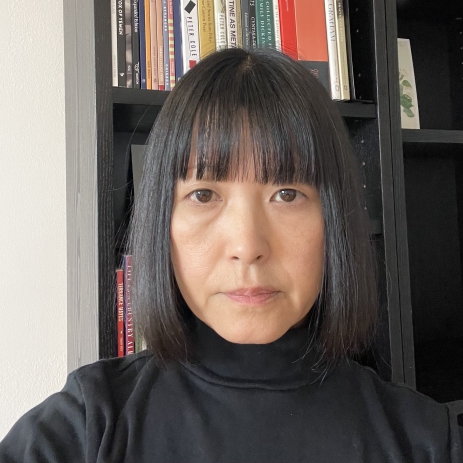
Kyoko Uchida is the author of the poetry collection Elsewhere (Texas Tech University Press, 2012) and the short story collection Notes for an Ending (Red Hen Press, forthcoming in spring 2028). Her poetry, prose, and translations have appeared in journals in Australia, France, and the United States, including Brooklyn Review, Boston Review, The Georgia Review, Los Angeles Review, Prairie Schooner, and Swamp Pink. She works for a nonprofit organization and lives in Brooklyn, New York.
Table of Contents for A Formal Feeling