
Acts of God
E. P. Tuazon
I can honestly say the reason why Joey and I didn’t work out was because we spent too much time worrying about the hereafter. I’m not saying there’s anything wrong with religion or thinking about the afterlife. People, especially Filipinos like us, need something to motivate them, give them comfort in despair, forgiveness where they can’t be forgiven, and something to worship and remind them there’s always something better, or, at the very least, something else.
If I can pinpoint the moment I realized this, it would be the last time Joey and I slept with each other. I don’t know how it started, but our lovemaking always fell into the same pattern. She would text me at midnight, always a workday, asking me to drive sixty miles to her place. I lived across the valley in a refurbished one bedroom between the desert and civilization, and she lived well above ground level, among the stars and her fellow artists and rich bohemians peppering verdant hillsides with the shimmer of their opal swimming pools.
My hatchback would struggle up the mountain and steep roads, my back pressed to my seat like a rollercoaster ride, before finally settling in her drive, illegally parked, mostly on her narrow street, barely on her even thinner sidewalk. As I got out, her silhouette would be peering down at me from behind her screen door as I climbed the stairs. At the top, it would open and she would lead me further up another flight, past her roommate’s floor—a sculptor of some clout—complaining about one of her sordid paintings that sold, lamenting another that didn’t, before pushing me down where she made her bed—a mess of faux furs and canvas—and made love to me with the same endearment and passion she showed her pieces in the process of their creation up until there was no more trying to get it right or make it work.
Afterwards, she would do everything to keep me awake to talk more about her life while I listened. She would nudge me from the coast of dawn with a warm cup of pour over coffee or else left-over vegan wraps or empanadas or any other weeks-old pastry from her past shows. She would discuss topics of Japanese woodblock, the smell of the curators in Berlin compared to Madagascar, how primeval music influenced the philosophy of lines and gestures in French stain glass—all of which she knew were beyond me.
Of those times and topics, the last night we slept together landed on a discussion of religion, and the conversation became dire the moment I mentioned that I was leaning towards reincarnation because the idea of coming back appealed to me more than going away forever.
“But we’re Filipino!” She said, sitting up, the peach canvas falling from her brown breasts. I never noticed until then that one was bigger than the other, “We’re all about going some place new, not staying in the same place and just becoming someone else. It’s our culture.”
I laughed, finishing a stale croissant and brushing its crumbs out of the black bear skin and onto the wooden, paint-pecked ground before us. Every night I was there, I imagined the speckled paint that riddled her floor was brail and, eventually, if I returned enough times, I would learn to understand some secret message she left for me to discover. Art, color theory, and medium were just words buried behind the work she leaned on her walls. They were nothing yet that I could feel or touch.
“I know I’m joking but I’m also serious. How does that reincarnation stuff work anyway?”
“You just die and come back, I guess.”
“Do you choose what to come back as?”
“I guess not.”
“That’s too arbitrary for me. That’s why I worship the saints: you can reason with them. There’s a little leverage with what you can get.” She tilted forward when the rhythmic strike of a hammer and the clatter of stone started underneath us. When I asked her about it before, she briefly mentioned that her sculptor roommate was inspired at the same time of night she wanted me and continued to talk over the sound of her working. This time being no different, she ignored the clacks and ticks and continued, myself wondering how much the sculptor heard of us when I was there, how much Joey really wanted me and how much I really wanted her. “My favorite one is Saint Peter. He was pretty devout. They crucified him upside down as an insult, but he saw it as a good thing. He didn’t want to die like his boyfriend did. He saw it as a favor. That’s what God’s missing: perspective.”
“Boyfriend?” I asked more in astonishment in not making the same conclusion than as an actual question. Why couldn’t the kind of love a man had for a God be that same kind of love?
“Jesus. You know those two had it going on. Peter had some serious denial. Isn’t that what the whole crowing three times story was about? That’s another thing the saints got on God and reincarnation: denial.”
I rubbed her back and she eased closer to me, her elbow on my thigh. The muffled banging went off and on. “I don’t see the benefit in those things.”
“The saints, they’re just like you and me. They’re human. Well, were human. The point is, you can reason with them. You get on their good side and you’re set for life.”
“Can’t you just get on God’s good side?” I asked and ran my hand through her long, thick hair, down her thin, brown neck and rough shoulders, the veins and stretchmarks that traced her limbs like vines reaching for sunlight.
“Who knows what God wants. He never lived like he could only have one life. Living like you got one life, one chance, changes your mind about a lot of things. You start to plan. You start to do everything towards that end, where you want to go. And, when you get there, you don’t want to be lonely so you start telling your friends how to get there too. That’s another thing they got on God: friends.”
I wasn’t going to pretend that I knew anything about religion, so I kept quiet. I was raised that way. Growing up an American-Filipino, I never had the opportunity to experience what my parents and most of my relatives went through. I didn’t know what it was like waking up in the back seat of a broke-down van and boiling water in a barrel to bathe. I didn’t know what it was like to forage the dumpsters for scraps, burn garbage, starve or be thankful for rain and clean clothes. My parents never wanted me to understand that. When they had me in the states, they never taught me the language just to make it easier for me. They always thought life could be remedied by ignorance.
“Why are you frowning?” She yawned in half a whisper.
I couldn’t tell if she was mad or just making an observation or both. “Just thinking about my parents.”
“Are they still alive?”
“Yeah.” I said. I didn’t know why that was the question most artists ask about parents.
“Mine are too. They got a big house in Santa Barbara. Not as big as the one back in Manila, but you know how Crazy Rich Asians are.”
“Never watched the movie.”
“It’s so true, isn’t it?”
“I wouldn’t know.” The clattering from downstairs became more pronounced and hurried. I imagined a miner catching the sparkle of gold instead of a sculptor entranced by a vision.
“How big is your parents’ house?”
I felt around with my free hand and found a yellow splotch and then a blue one. I closed my eyes and tried to tell the difference. “It’s not bad. A three-bedroom, two-bathroom in Encino.”
“Is it the only one?”
“The only one I know of.” I joked, but her eyes looked down at me even when I was the one sitting up.
“Nothing back home in the Philippines?”
I took my hand off her and felt lines of pink and cream. They pulsed with each strike of life from below. I tried to link them back to one of her pieces, but they were too soft to be anything she used to paint with. Although the idea that there was more of her work I haven’t seen excited me, the possibility of someone else leaving these colors was worrisome. “No, they put everything into that home.”
“My parents can’t settle anywhere. They need to be here and there all the time. They can’t stay in one place.”
“My parents can’t afford to do that.”
“Of course they can. There’s no such thing as a Filipino who can’t afford to do anything. If they say they’re poor they’re just being frugal. They sleep on their money or are probably just hiding it.”
Again, I stayed quiet and continued to rub at the floor. All I knew was the opposite. There was nothing I knew about her kind of Filipino as much there was nothing I knew about mine.
When the chirp of stone stopped, it became quiet enough to hear my fingers sliding from one color to the next. I closed my eyes, believing that I could tell the difference between magenta and red, the off white from the coal grey. Somewhere in that, Joey picked up again, but I don’t remember if it was the beginning, middle, or end.
“If I believed in reincarnation, I’d be really worried about my future. You die and what was it all for? Where is the merit in living again?”
And, as if tired of my not answering, the person below exclaimed, in a brief but challenged sigh, “Oh God,” before the immediate sound of a thorough and pure crash of stone and flesh. The floor rumbled and in the still silence we nearly forgot ourselves before the coldness of the room reached our warm bodies again.
After we dressed, we descended the stairs down to the floor below and found what we had feared: her roommate, the sculptor, smothered by her work. Unlike Joey’s floor covered in drippings, the sculptor’s floor was spotless, save the rubble and flesh and blood and hair that freshly marred the wood.
Joey looked away but I could only pretend to. There was something there I couldn’t ignore. The makings of a face and arms hid in the stone. An image, an idea had been lifted from the earth only to be put back there again. Then it spoke.
“Where am I?” The broken piece said.
Joey turned to it and we both looked down, staring at what we could only understand as its mouth.
“Where am I?” It said again, whispering to the floor.
“You fell.” I said.
It took a moment to speak again but its struggle to breathe let us know it was alive. “Am I done?”
“I’m afraid not.” Joey said and looked on. She gathered the collar of her sweater and bit down on it. In all her years as an artist, she had never once spoken to a work of art before. Of all the things she had done to it, how could she?
“I heard you above,” it gasped and choked, “I heard you telling me what to be. What I was and wasn’t. I can’t tell you what I am. I swear, I tried.”
“I think that was the sculptor,” I said, but Joey nudged my chest with the back of her head to keep me quiet, to stop me from misspeaking or making any mistakes.
She perched down beside it, so close I could see its every puff move her. “You were going to be something. I can tell you that much.”
“Where is the sculptor? She can finish me.”
“She’s gone. She’s not coming back to finish you.”
It hacked some teeth and shed some gravel. In its head, it was already somewhere else. “Then maybe you can finish me. You can see me.”
Joey and I shook at its voice. It was broken now, and even before then, far from finished. We stood before it as it writhed and thrashed as if stuck in a husk, as if stewing behind an impenetrable veil. Even with my lack of knowledge, I could tell it was beyond saving.
Joey stood up and inhaled to steel herself, her body still as she talked as if any disruption or lapse in concentration would bring her to her knees again. “In art, it comes down to intention. My intention for you would be my own. I can’t finish you. Maybe there are ways, but this is all I know.”
“Then what will become of me?” it asked.
She stepped back and stood beside me. From our vantage point, we could take it all in. What belonged to the sculptor and what still belonged to stone. Before she spoke, Joey grabbed my hand, at first like a brush and then tightly like a razor.
“You are nothing.” She said, and I could feel the squeeze of pity in the loosening of her grasp until she finally let go. “You will be nothing as long as you live.”
The paramedics arrived an hour later, then the police. They asked us questions that Joey had all the answers to. What was she doing? What was she? What were we doing? What were we? By then, the aftermath and results, the questions and answers, all of it sobered her as much as the art fulfilled her. To me, it all mattered as much as what was on the floor, and how much of it we put up and pay for.
Before I left, the paramedics tried to revive her, but it was only out of courtesy. We all knew there was no coming back from this, so they gathered whatever was left and took her away.
Alone, in the brisk morning air, I found a ticket on my windshield from the police. A reminder from the universe that I was fumbling closer to enlightenment as I made my easy descent back to the rest of my life.
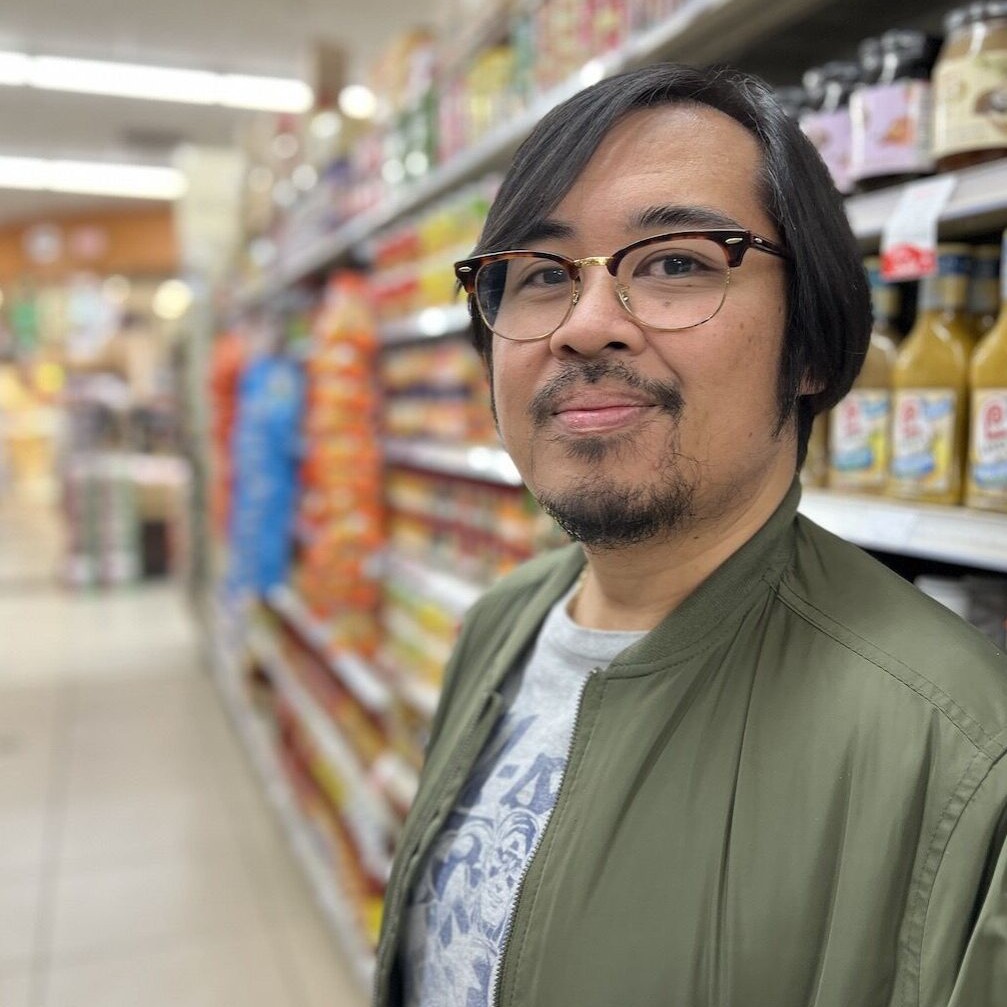
E. P. Tuazon is a Filipino American writer from Los Angeles. His latest book, A Professional Lola, came out in 2024 with Red Hen Press and was selected as the winner of the AWP Grace Paley Prize in Fiction. His forthcoming collection, Kain Tayo! (Let’s Eat!) Or Forever Hold Our Piece, comes out 2027 (Red Hen Press). In his spare time, he likes to go to Seafood City and gossip with the crabs.
Table of Contents for A Formal Feeling