
City in Uniform (from UNIFORMIS)
Ileana Garma
Translated from the Spanish by Allison A. deFreese
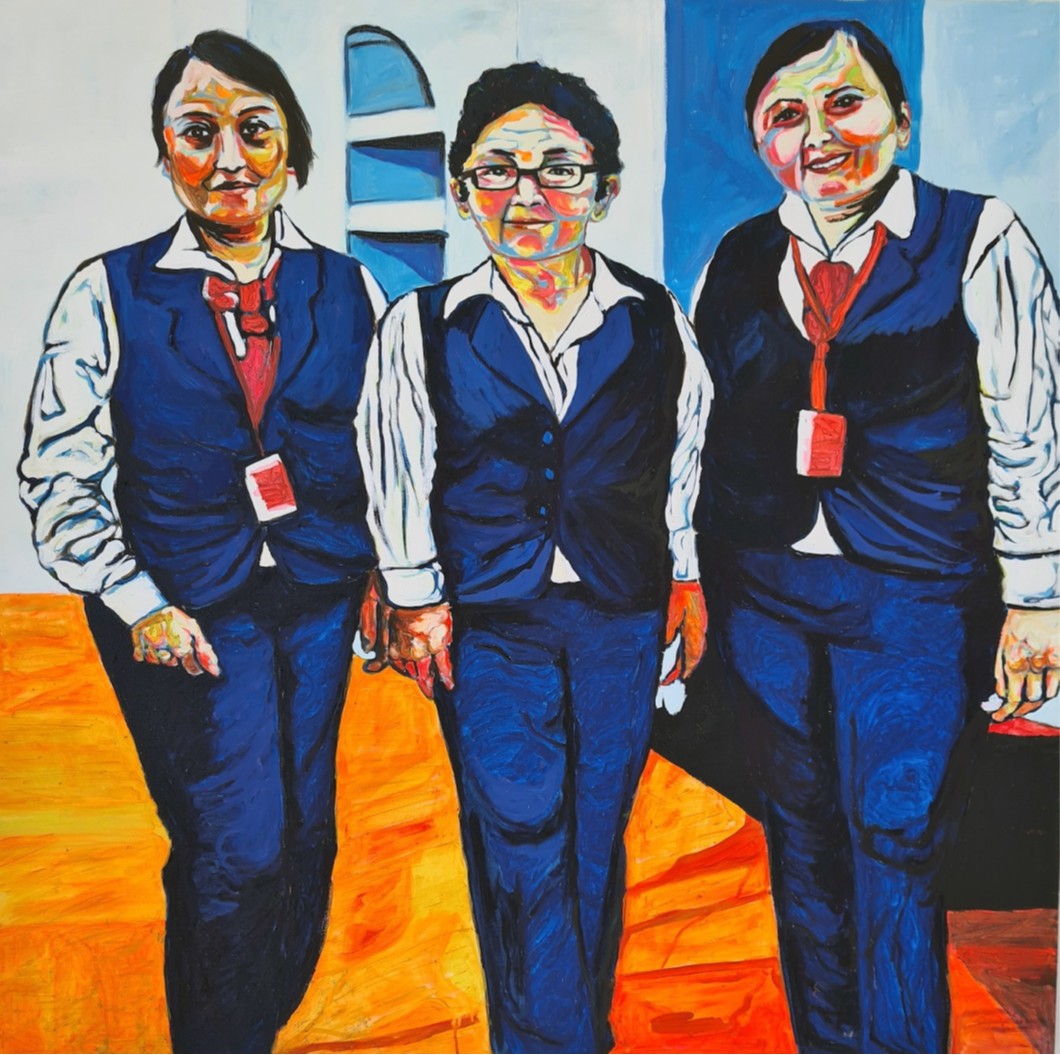
Heads or tails,
the most probable outcome
is that your faithful soul will first
either fill with bitterness
or with syrup;
either heads or tails
turns your soul into asbestos.
Polyester is what lasts,
nature doesn’t matter,
and life is short.
Dana Gelina, Polyester
§
The first record
of people in uniform
dates to the Sumerian region of Mesopotamia
the domestication
of wild animals began
in the Sumerian region of Mesopotamia.
So tame dogs and sheep came to exist
with uniformed men and their rulers
So what is it we have always feared?
To be ourselves
I think
§
When a girl
gets dressed at sunrise
all sense of momentum
is lost
her way of moving
she is motionless for a second
from one minute to the next anxiety
may call to me
may tell me to drink a glass of milk
to arrange my hair
all movement
will lose
its way of moving
I will never leave
the breakfast nook
where I button myself up
year after year after
year after year after
year after year after
after year after year
after year
§
What I don’t like
about children in uniforms
is that I always see
my own face
when I look at theirs
§
I go walking around the central plaza
dressed as a firefighter
wearing the colors of a traffic light on alert
I’ve learned how to drown out
bright storefronts
more subtle ways exist
perhaps
to drown out the world
and lucid fears
by turning on the television
by smoking one cigarette after another
help me understand
about helmets—-about boots
I let Saturday catch fire
like a sad pillar
it doesn’t matter if I can’t stop
its advance
there are no subtle ways
to put out a fire
§
I look at snapshots of soldiers
old photos
dark green is military green
camouflaged
men with bent legs
and curved spines
take aim
camouflaged soldiers take aim
attempting to eliminate the enemy
if I could eliminate something
I would eradicate neckties
the French saw Croatian soldiers
wear ties during the Thirty Years’ War
like soldiers
like copies of the soldiers
who crossed Europe in their cravats
four hundred years ago
I see a soldier advance through the countryside
if I could advance
I would eliminate militarized thinking
dark green is military green
the color of desks and, as an aside,
offices
that are not battlefields
where filming is not allowed
aim straight
gaze into infinity
Poemas de Ciudad Uniformada
Es más probable,
cara o cruz,
que antes tu fiel alma se llene de amargores
o de almíbar;
ambos, cara o cruz,
vuelven el alma de asbesto.
El poliéster perdura,
la naturaleza no importa,
la vida es breve.
Dana Gelina
§
En la región Sumeria de Mesopotamia
se encuentra el primer registro
de personas uniformadas
en la región Sumeria de Mesopotamia
comenzó la domesticación
de animales salvajes
así surgieron perros y borregos
los hombres uniformados y los jefes
entonces
¿siempre hemos temido?
¿a qué?
a ser uno mismo
creo
§
Cuando una niña se viste
al amanecer
todo movimiento pierde
su condición de movimiento
inmóvil por un segundo
de un minuto a otro me llamará
la angustia
me pedirá que beba leche
me arreglará el cabello
todo movimiento
perderá
su condición
de movimiento
me quedo para siempre
en el desayunador abotono
un año tras otro
un año tras otro
un año tras otro
un año tras otro
un año tras otro
§
Lo que no me gusta
de los niños uniformados
es que encuentro en ellos
siempre
mi propio rostro
§
Camino vestida de bombero
en medio de una plaza
los colores de un semáforo en alerta
he aprendido a ahogar
escaparates brillantes
hay maneras más sutiles
quizá
de ahogar el mundo
los miedos lúcidos
prende el televisor
fuma un cigarrillo tras otro
ayúdame a entender
cómo funciona
el casco—-las botas
dejo que el sábado se encienda
como una columna triste
no importa si no logro
detener el avance
no hay maneras sutiles
de apagar el fuego
§
Veo fotografías de militares
antiguas fotografías
verde oscuro que es verde militar
camuflajes
los hombres doblan las piernas
encorvan la espalda
apuntan
los militares apuntan camuflados
intentan eliminar al enemigo
si pudiera eliminar algo
eliminaría las corbatas
los franceses vieron al ejército croata
llevar corbatas durante la guerra de los treinta años
como soldados
como la copia de unos soldados
que atravesaron Europa
hace cuatrocientos años
veo avanzar a un militar en medio del campo
si pudiera avanzar
eliminaría los pensamientos militarizados
verde oscuro que es verde militar
los escritorios y de paso
las oficinas
que no son campos
que no nos permiten rodar
apuntar directo
mirar al infinito

Born and raised in the Yucatan, Ileana Garma holds a degree in Visual Arts from the Escuela Superior de Artes de Yucatán. She has published prize-winning novellas, books of poetry, and short stories. Her visual artwork has been featured in exhibitions at several museums, galleries and venues. She has been the recipient of a PECDA Painting Fellowship (2018-2019) as well as two FONCA (National Endowment for Culture and Arts/Fondo Nacional para la Cultura y las Artes) fellowships in Poetry (2013-2014 and 2020-2021). Garma has also received the Premio National in Poetry for her book Caza de letras/The Letter Hunt (UNAM, 2012), the National Charles Bukowski Poetry Prize (2008), and was awarded the 2022 Agustín Yáñez National Short Story Prize for her book Cómo vivir sola después de los cuarenta/How to Live Alone After Forty (Libros del Marqués, 2023).
Allison A. deFreese is president of the Oregon Society of Translators and Interpreters (OSTI), has published two books of verse, and translated several books by poets from the Yucatan Peninsula. Her translations of other works by Ileana Garma appear or are forthcoming in The Adroit Journal, The Los Angeles Review, and Words Without Borders.
Table of Contents for A Formal Feeling