
Stanislav Lvovsky (Russia / Diaspora)
Translated by Yana Kane (USA)
those who can read and those who cannot read
those who can write—and those who cannot write
those who have—–loads of words
and those who have—-not a single word
those who have something to say——and those who have nothing to say
those who have a reason to speak and those who have no reason to speak
those who are guilty——and those—–who are not guilty
those whom—-our heart holds close—and those who would be better off never born
those who have died of grief——–and those who are dying of grief
those————–who did——————-what they could
and those who did—what they ought to
and me and my has-been language.
and you
you.
те кто может читать и те кто не может читать…
те кто может читать и те кто не может читать
те кто могут писать—и те кто не могут писать
те у кого—–полно слов
и те у кого нет—-ни одного слова
те кому есть что сказать—————и те кому нечего сказать
те кому есть зачем говорить и те кому незачем говорить
те кто виноват———и те———-кто не виноват
те с кем—–наше сердце и те кому лучше бы не родиться
те кто уже умер от горя—————-и те кто умирает от горя
те————–кто делал————–что мог
и те кто делал то—что был должен
и я и бывший язык.
и вы
вы.
Translator’s note. When I contacted Stanislav Lvovsky to request his permission to translate his poetry, he asked that I share my translations with him to enable him to offer comments. (Lvovsky currently lives in the UK and is fluent in English.)
One of the fascinating challenges of translation is dealing with devices that exist in the target language, but not in the source language. For example, in English, it’s possible to write a negative statement with or without a contraction (e.g., isn’t vs. is not). The translator must decide whether to use one or the other, and the original doesn’t supply any direct clues. It’s a matter of interpreting the overall tone of the original to figure out how formal the language of the translation needs to be.
A different challenge arises from the fact that even if the author of the original and the translator come from the same cultural context at the level of the language and the secular literature, they might not fully share the context of religious literature.
Both of these challenges came into play in my work on the poem “те кто может читать и те кто не может читать…” which was the first text by Lvovsky that I translated.
In my first draft, I used contractions (“can’t read”, “aren’t guilty”). In the same draft, I translated the last line of the fourth couplet as follows:
“those who—-are close to our heart and those we wish haven’t been born”
Lvovsky sent me a number of comments. In particular, he asked me not to use contractions. Also, he pointed out that the part about not being born refers to Matthew 26:24. Not being familiar with the New Testament in Russian, I had missed the reference. Once I grasped the presence of biblical language, I could see the need for a more formal register and immediately agreed to replace contractions with the uncontracted forms. We went back and forth on how to translate the line with the biblical reference. We wanted to preserve the non-clichéd, slightly odd yet fluent language of the original while also ensuring that the line could be read aloud without stumbling over too many syllables (as it is the most polysyllabic line in the poem). Eventually, I settled on the version presented in this translation. Once this line was translated to our satisfaction, the rest of the translation fell into place.
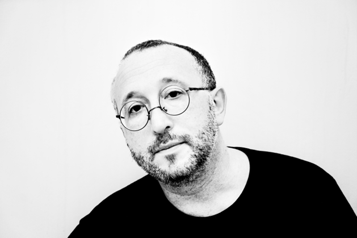
Stanislav Lvovsky is a writer and researcher. His poetry and prose collections include White Noise, Poems about the Motherland, Camera Rostrum, and A Word on Flowers and Dogs. He co-authored the novel Half of the Sky and the play Sixplays, staged at Moscow’s Teatr.doc. He translated poetry from English into Russian. His literary honours include the Andrei Bely Prize.

Yana Kane came to the US as a refugee from the USSR. Her translations appeared in Deep Vellum’s Best Literary Translations in 2025. She won the 2024 RHINO Translation Prize. Her translation of Dmitry Blizniuk’s, My Fish Will Stay Alive is forthcoming from Serving House Books. She is grateful to Bruce Esrig for editing her English-language texts.
Back: Roman Osminkin | Dmitri Manin ■