
Paris or Jerusalem?
Esther Raab
Translated from the Hebrew by Benjamin Balint
I had just bathed Mitzi, my Angora cat, in soapy water. Her long fur clung wetly to her skin, her whole small, frail body shrunken, shivering with cold. I wrapped her in an old towel, set her in the sun, and sat beside her. Slowly she began to purr, softly at first, blinking her eyes, as if sleep were drawing near, when suddenly came a command: “Come!”
When my mother issued a command, there was no defying it. Her hand, small yet toughened by labor, would jab between my thin shoulders and steer me wherever she wished. Thus she straightened the red ribbon in my hair, brushed the sand from my bare feet, and propelled me straight into the salon. From within came a jumble of voices: Yiddish, German, Russian all mingling. Such was the custom in our house: tourists, Zionist dignitaries from abroad. Entering, I passed along a whole row of guests, extending my hand in greeting, one after another, just as in winter I buttoned my tall boots: one by one, one by one, though my thoughts were elsewhere. I knew exactly what was expected of me. I was to give a “number,” to entertain the visitors with a recitation or a song. Sometimes, for example, I would declaim with solemn pathos:
————————“Peace to you, Martha, my bride for eternity!
————————I return to the fray, for the wound is healed.”*
Or, in a tender, plaintive tone:
————————“Dalia, Dalia, you are not poor.
————————Whither do you go—”**
This time, I chose to sing: “I lift my eyes to the mountains” (Psalm 121). My Russian teacher had set it to the national melody of Ukraine—difficult, with its sudden climbs and plunges. It demanded to be performed. My soprano was clear and smooth. I set myself to the task with devotion: I opened my mouth wide, sang with childlike innocence, pronouncing the ancient words with crystalline ease. Where most girls would falter, pant, and end in a faint hoarse whisper, I mounted lightly to the high notes of the finale and finished with a strong, ringing tone.
Applause broke over me like a storm. I stood still, like a duck caught in the rain, fixing my gaze stubbornly on my mother, waiting for the signal, the sign to retreat. But the sign never came.
By then, Mitzi had surely wriggled from her towel, rolling in the hot sand until her long, silken fur was matted with burrs and straw. I loved drying her in the sun until she resembled a ball of white down, with two green eyes gleaming within like twin emeralds.
And then, suddenly, two strange, cold eyes loomed before me, and a harsh voice asked:
“Tell me, child, where would you rather live—Paris, or Jerusalem?”
Paris or Jerusalem? I must answer at once, I must do my duty. Paris? I had never heard such a name. In my mind flickered familiar places: Rosh Pina, Zikhron, Rehovot, Gedera… Perhaps Paris was some Arab village beyond Gedera?
I answered, brief and firm: “Jerusalem!”
At once I saw before me the window in Grandmother’s house. Beneath it stood a table, upon it a stool; and by climbing the stool, poking one’s head through the window, one could gaze out across the Kidron Valley, where a kind of living map was spread below: donkeys laden with sacks, Arab women with baskets of greens upon their heads climbing the slope, and mountains encircling all. I lift my eyes to the mountains—the words resounded in my ears. And suddenly I felt the air around me, knew that I had struck true, fulfilled my duty in every respect. Without waiting for a signal, I gave a great leap, then another, and flew outside.
Years later, during a Zionist Congress, I lodged in the same inn as that “man of iron” with the cold eyes. I sat in the hall before a heap of envelopes and postcards, absorbed in writing letters home, when suddenly those eyes appeared again above me:
“Writing home, are you?—‘I lift my eyes to the mountains’?”
Notes: Esther Raab, “Paris o Yerushalayim?” in Kol ha-prozah (Collected Prose), ed. Ehud Ben Ezer (2001), 119–22. First published in Haaretz, April 4, 1952.
* A line from Y.L. Gordon’s poem, “Between the Lion’s Teeth,” –trans.
** A partial quotation from Micha Yosef Lebensohn’s poem “Dalia, the Forsaken” (Daliyah Niddaḥat) –trans.
פריס או ירושלים

Translator’s note: In 1903, Zionist leader Menachem Ussishkin toured the Land of Israel, seeking to unite the Yishuv under a single public administration. Visiting all the colonies, he came also to Petah Tikva, then the largest. There he called upon Yehuda Raab, Esther’s father. In his memoir, Yehuda recounts his version of the exchange:
“Ussishkin came to my house. He turned to my daughter Esther in Hebrew: ‘Where would you like to settle?’
‘In the eighth grade,’ she replied.
‘No, where would you like to live? In the capital?’
‘You mean Jerusalem?’ she asked. ‘No, here in Petah Tikva.’
Ussishkin pressed: ‘I meant Paris, not Jerusalem. Would you like to go to Paris?’
‘No,’ the girl answered angrily, ‘I want to stay in the land of my fathers!’
With all respect to Ussishkin, I’ve never forgotten that test. He went so far as to say: ‘Those words were put in her mouth.’ Had she answered “Paris,” it would have been held up as proof of the younger generation’s craving for Frenchness, for relocating abroad. Since she answered otherwise, it was assumed she’d been coached.”
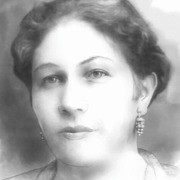
Esther Raab (1894–1981), often called the “first native” modern Hebrew poet, was born into one of the founding families of one of the first agricultural settlements in Eretz Israel. Born in Petah Tikvah, she later lived in Cairo, then Paris, finally settling in Tel Aviv.
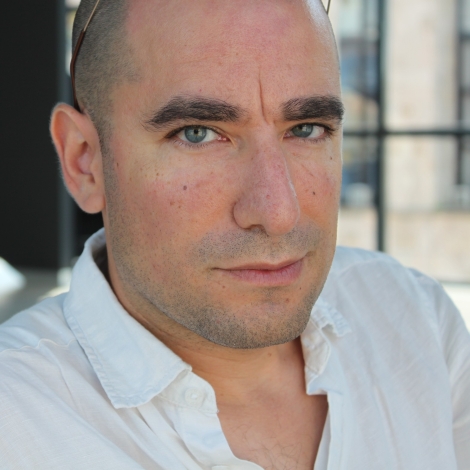
Benjamin Balint is the author of Kafka’s Last Trial, winner of the 2020 Sami Rohr Prize in Jewish Literature, and Bruno Schulz: An Artist, a Murder, and the Hijacking of History, winner of a National Jewish Book Award. His translations from the Hebrew have appeared in the New Yorker and Poetry International. He has taught literature at Dartmouth, the University of Freiburg, and at the Bard College humanities program in East Jerusalem.
Table of Contents for A Formal Feeling