
Vlada Malka Pecena
Robert snapped up his rifle the instant he heard a click. In the bush, he saw the dark mouth of a pistol aimed at him, and he stilled, waiting for the shot. It did not come. Robert was alive — alive! Fortune had taken his side.
Ahead of him, a soldier with a mop of blond hair was fighting his pistol’s jammed slide. Russian. Partisan? Robert’s finger tightened on the trigger.
“Drop it,” Robert said.
For a long moment, the Russian stared into Robert’s eyes, and Robert thought he might fire at him anyway. Or at himself. In an instant, the Russian turned the barrel toward his own face, but then he weakened his grip, and the pistol slipped into the bed of moss. “Hands.” Robert motioned upward with his rifle. “Slow.” The Russian obeyed.
As Robert edged closer, he noticed a parachute tangled high in the branches, and, before he saw the man whole, he heard his quick, shallow breathing. The Russian sat at the base of the tree, trapped beneath a heavy branch. It curved like an arm, bent at the elbow where it struck the ground, pinning one of the Russian’s legs, and his other leg was twisted at a funny, unnatural angle. Robert pushed the pistol away.
Young, he thought, pressing the rifle against the Russian’s head. So this was the front: pines and spruces goldened by sunlight, the sharp clutch of brushes, and boys lying out in the grass with their guns, as if out for a rabbit hunt. Easy targets.
“Know German?” Robert asked.
“Yes.”
“You alone?”
“Yes.”
“Hands,” Robert barked.
The Russian saying he was alone meant nothing; they were everywhere now, and Robert had no intention of giving himself up. Should he fire into the trees? He might flush someone out, or scare them off, if anyone lay hidden there in camouflage. The last bullet…
His stomach turned with a complaining squeak.
“Please,” the Russian began hurriedly, as Robert leaned in to search him, “I am a regular soldier, I swear—”
Robert struck him across the mouth. The slap was light and unsatisfying.
The Russian tried to cover his face at once, but Robert forced his hands down. Cold and reddened, they went slack, and the boy started murmuring under his breath, some indistinct nonsense over and over again. Perhaps he was praying. Perhaps he was going to cry. Pathetic, either way.
Robert cut a strip from the parachute and bound the Russian’s hands, then went through his pouches. Nothing. And the jammed pistol lay too far for him to reach without rising, and that he couldn’t do anyway. On the boy’s belt, though, Robert found a half-empty flask. Water. He tossed it aside, faintly disappointed not to find vodka.
Yet when he stepped back, he found the Russian studying him in turn. The boy’s eyes moved over Robert’s rifle, his knife, the hand grenade on his belt, lingering on each, before darting away as if the looking hadn’t been meant. Robert adjusted the strap of his rifle. “You scream, I kill you. Understand?” he said. The Russian nodded.
Keeping his finger on the trigger, Robert edged round the tree. He came upon a handful of Wehrmacht soldiers and some Russians besides. They were all dead, and had been so for some time; the warm air carried the stale smell of decay. He would have to search them for ammunition, Robert thought vacantly, his gaze falling on a torn rucksack down the path. Inside, he found a tin, dented along one side, but still sealed.
He pried it open with his knife. The smell that rose from it reminded him of wet dog food, but after days of living on berries, he began eating at once, scooping the cold slurp with the blade and licking it off. Five days ago. He had last eaten properly five days ago, he remembered, as his stomach twisted and shuddered. He had hunted a slim rabbit and spent three bullets on it, three of his beautiful, priceless bullets, and then roasted it over a small fire. The rabbit had been the most delicious thing he’d eaten in his life. He’d even sucked the bones clean.
“Found your friends,” Robert said as he returned to the Russian. “They are fine, lying there stone dead. Best way for Bolsheviks.”
“You swine!”
“Shut up.”
Robert tested the branch that pinned the boy, pressing it with his hand to see how firmly it held, then sat on it. Tears at once filled the Russian’s eyes, but he made no sound — no groan, not even a sharp breath. Enduring, Robert thought, picking a piece of meat with the tip of his knife. The meat tasted nothing like the rabbit flesh, but Robert could still imagine the warm thickness of it between his teeth.
“If you keep staring,” he said, aware of the Russian’s gaze on the tin, “I’ll break your arm.”
The boy’s eyes flicked to the pistol at Robert’s feet, then quickly away, as he turned his head and hastily wiped a tear track from his grimy cheek. He had a stubble, pale and thin, like a dusting of snow. Robert hadn’t shaved in days either, and he felt dirty and ugly, the beard along his jaw coarse to the touch, but the Russian’s was so sparse it made him look pitiably boyish. How old could he be? Twenty? Twenty-two?
Robert closed his eyes and pictured a small hole in the boy’s head. The clap of the rifle… one shot… His last bullet.
“Will you take me prisoner?” the Russian asked. His German was too soft for a Slavic accent and reminded Robert of a cobbler from his home street, a man named Blankenstein. Robert remembered his name because of Blankenstein Castle, which he had seen as a child on his first ever trip through Germany, and because the man had fixed his favourite school shoes when they tore. He also used to say “Shtot” instead of “Stadt,” which Robert always found amusing.
Maybe he ought to take the boy prisoner, after all. Maybe they had yet to trade with the Soviets. A handful of decent German soldiers in exchange for a useless pilot, picked up from the heart of the enemy lines — had Robert not earned himself the Knight’s Cross?
“Where were you headed?” he asked.
The Russian held his tied hands on his stomach in an oddly homely way, like a man settling back after a good meal, and there was something patient in his gaze now that Robert didn’t like. He had first meant to ask where the German border was, but then it came to him that the question might sound like defeat conceded, and the idea of discussing his country’s borders with a Russian turned his stomach. Robert kicked the boy in the trapped leg, and the boy groaned.
“Show me where you were meant to fly to,” Robert said curtly. “And where from.”
The boy sucked in a breath through his teeth, his face still tight with pain. After a moment, though, he blurted, “You let me drink first.”
Pensive, Robert licked the grease from the knife. Goddamn, it tasted just as good as the rabbit had. Then, grudgingly, he set the knife between his teeth and bent to retrieve the Russian’s flask. Grit and pine needles clung to the rim, but Robert didn’t bother to wipe it.
The boy drank greedily, water spilling at the corners of his mouth, and his bound hands trembled as he tipped the flask higher. Robert crouched still, dully fascinated by the scatter of freckles across the boy’s crooked nose, and his own throat felt dry. The water — the Russian’s water. He might yet use it to refill his own flask. Robert pulled the flask away mid-swallow, watching with a small, private satisfaction as the Russian leaned after it before catching himself. In a flash of unguarded anger, he bared his teeth.
“Show me,” Robert ordered, unfolding his map. The paper was pale along the folds, but the names could still be made out.
The boy turned away. “I don’t read German,” he muttered.
Robert set the boot on his broken leg, leaning into it, and the boy arched his back silently. A moment later, though, came a choked, muffled groan, dragged out as the Russian tried to hold it.
“Please,” he managed through clenched teeth.
“Show me.”
“Please—please, I will show you.”
As Robert eased off, the boy sobbed raggedly, wiping at his cheek.
“Show me right,” Robert said.
The boy glanced at him, lips tightening as if he meant to speak, but whatever it was, he swallowed it and looked at the map in a kind of bitter, defeated compliance. Trained like a dog, Robert thought. And a dog he is.
From what the boy showed, it appeared that Robert had come far into the General Government, so far that Warsaw might as well have been just over the turn. Which meant he’d been walking in the wrong direction all along. A sudden, sour fury rose in him — at the Russian, at the Russians in general, but especially at this one. Folding the map back, Robert kicked the Russian’s trapped leg again, this time without enthusiasm, just out of irritation.
The Russian tried to keep his face composed, but his mouth twisted.
Robert took off his rifle. He would kill the boy, pack the remaining tins, and make it back to Germany. The thought cheered Robert a little. One more Russian dead — a serviceable thing for the end of a war. But the bullet, his last bullet… If he meant to eat later, he ought to spare it. Irritated, Robert slung the rifle over his shoulder and settled back on the branch.
The Russian glanced once more at the pistol lying at Robert’s boots. Robert pushed it deeper into the moss. “How did you know I was German?” he asked, scraping a piece of meat from the bottom of the tin.
“Sorry?”
“Before, you almost shot me. How did you know I wasn’t one of yours?”
“I saw you in the trees,” the Russian said. “When you lie here long enough, you learn the forest well.”
Not a word about the uniform. Diplomatic. Robert wouldn’t have thought the Russians capable of much diplomacy. For a moment, he wondered — if their positions had been reversed, if the Russian had been standing there with the rifle while Robert sat pinned beneath the tree — would the boy have spared him?
No. They would never have been in reversed positions.
“Where’s your unit?” the Russian asked after a moment.
“On a spring holiday in Saint-Tropez. Waiting on a call from Berlin to finish off your friends.”
“Then why are you here?”
His genuinely perplexed tone grated on Robert. “I’m head of tourism back home in Nuremberg. They sent me ahead to scout forests for future summer retreats for the Reich’s finest.”
“Nuremberg,” the Russian repeated, thoughtful.
Why had he picked the name out? Robert shifted on the branch, annoyed. Perhaps the boy might be less of a fool he’d taken him for.
“Beautiful city,” the Russian said, but faltered at once, looking at Robert with a kind of frightened expectancy. And again, “Shtot” instead of “Stadt.” Some obscure eastern accent, must be.
“Not for your kind,” Robert muttered.
The Russian swallowed then. “I had relatives there,” he said cautiously. “My grandparents moved east years ago, but they spoke German at home.”
“Your German’s terrible. All wrong.”
“It’s different from yours.”
He might be a Jew, Robert thought suddenly. If so, he would have to shoot him —
Robert would sooner starve than let one more Jew slip through his hands. Was “Shtot” Yiddish? No, it couldn’t be. And the cobbler, Blankenstein, had certainly not been a Jew; he’d been such a generous, reputable man. And the Russian didn’t look Jewish. If anything, he looked very much non-Jewish. Then again, how would Robert know what Jews looked like? He knew only their naked spines and the backs of their heads.
“My family lives near Minsk now,” the Russian said after another moment.
Robert crushed the empty tin beneath his boot. “I was at Minsk.”
“You see towns?”
“Many.”
“You stopped there?”
Giving the boy a sidelong glance, Robert suddenly felt very old and very unhappy. How long ago had it been? They’d been doing what mattered most, and he’d been the most important man in the world, but there was no explaining any of that to a filthy Bolshevik.
Robert turned his head away.
He couldn’t keep going with only one bullet.
Gripping the strap of his rifle, he returned to the rucksack and rummaged through it for more tins, glancing back every few moments to make sure the Russian had not moved.
“So,” the Russian said, sitting just as he’d been, “what did you do in the towns?”
One other tin lay burst open under a blackberry bush, its contents still held in by the twisted lid. Robert scraped some out with his finger. Fish. He took a few more scoops, but when he tilted the lid open, he saw a worm wriggling in the slurp. Robert wiped his finger on the grass and left the tin where it was.
“We followed the army,” he muttered. “Front moved out. We moved in.”
“You are not Wehrmacht, then?”
Robert turned, frowning. Was the Russian testing him? Could he truly not notice? The eagle on Robert’s sleeve.
There were moments Robert wished he’d been an ordinary soldier. At the beginning, he hated it: the roundups, the Schutzmannschaften, the dirt from the pits all over his boots. But a day came, and he said he preferred it to the gas vans. He held to that still. Unlike the others, who always complained, Robert knew how to put a bullet neatly into the back of a man’s head so that he actually stayed dead. It was a useful skill when hundreds of them passed before your gun, and there were quotas to fill.
The Russian, though, kept waiting for an answer, with his head turned at an awkward angle to see over the tree. Robert crouched beside a dead German boy and began working the pouch on his belt open. “Wehrmacht could only do so much,” he said. “There was plenty left for the rest of us.”
“Restoring order, yes?”
“Shut up.”
In the pouch, Robert found stripper clips stacked in pairs, each twisted badly out of shape. He hurled them into the bush. “You would’ve thanked us when we were finished.” He shoved the corpse aside with his boot. “They came easy enough. A few shops burned, a few Molotovs thrown. Never much fight in them.”
“Who?”
“The Jews. Not only them, but mostly them. They were always easier to find.”
When Robert glanced back, he found the Russian still watching, with a deep crease between his eyebrows, as though he had not understood his words. Something in his expression tightened. Perhaps it hurt for him to bend that way, or perhaps he truly had not understood. Robert considered repeating himself more slowly, or with other words, but moved to the next corpse instead.
That one looked barely twelve, and flies had already clustered at the corners of his blue eyes. His expression was oddly light, surprised, as if a friend had called his name just before the shot took him. Those kids. They barely knew how to hold a rifle. Robert tugged at a pouch on his belt.
“Mostly Jews,” he muttered. The stud on the flap had stuck, so he braced his knee against the corpse and pulled harder. “They’ll be out again soon, whining about the resettlements.” He was pleased with himself for recalling the proper term. Once he pulled the flap loose, Robert found six stripper clips inside, untouched, and smiled. He drew several free, counting them by feel.
The Russian still had his eyes on him — not crying, not pleading, just watching. Robert held his gaze for a moment, then turned away and worked the bolt of his rifle up. Let him watch…
Nearby, a branch snapped. Robert pocketed the clips, looking around at the green press of trees, but the forest remained quiet and undisturbed. Reassured, Robert pressed the cartridges into his rifle’s magazine and drove the bolt forward with a hard click. Locked.
Ready.
He heard the shot but did not feel it.
For a moment, nothing happened. Robert took two unsteady steps before a dull, spreading pain opened in his stomach, and he sank onto his knees, then pitched forward into the pine needles.
As the forest tilted, Robert’s gaze fixed on the Russian. He had dragged himself onto the moss, twisted on one hip, his body shaking with the effort of it. In his bound hands, he held the pistol. And who would have thought? The little coward found his strength after all.
His face was drawn and wet; he sagged forward, with his forehead into the moss.
“Shma Yisroel, Adonai Eloheinu…”
A Jew, then, Robert thought blankly. Of course, a Jew. His stiff hand crept along his belt, searching for the grenade. A whiner and a Jew. All of them Russians are Jews. He should’ve killed him at once; he should’ve known.
A faint warmth returned to his fingers as Robert worked the grenade loose from his belt. With slow, clumsy care, he pulled the pin and then pushed the grenade away. Robert heard it roll over the dry needles, and he heard a sob somewhere far away, and the rustle of cloth against splinters, and another creak of the branch, and foreign words again. Robert closed his eyes. He knew. He could’ve done with a good, fat rabbit now… He should have known.
The forest fell quiet again. Then the Jew laughed once, and then the grenade went off.
Author’s note. Inspired by Erich Maria Remarque’s A Time to Love and a Time to Die (1954), this short story is conceived as a form of literary collaboration with Remarque’s fiction. It engages the humanism of his (anti)war novels by imagining its failure: a Remarque-esque character, constrained by ideological conditioning, is placed in physical proximity to an enemy soldier, yet denied empathy and thus the recognition of shared humanity. In this sense, the piece becomes a kind of counterpoint to Remarque’s narratives, asking what happens when the conditions that usually enable empathy in his work do not hold.
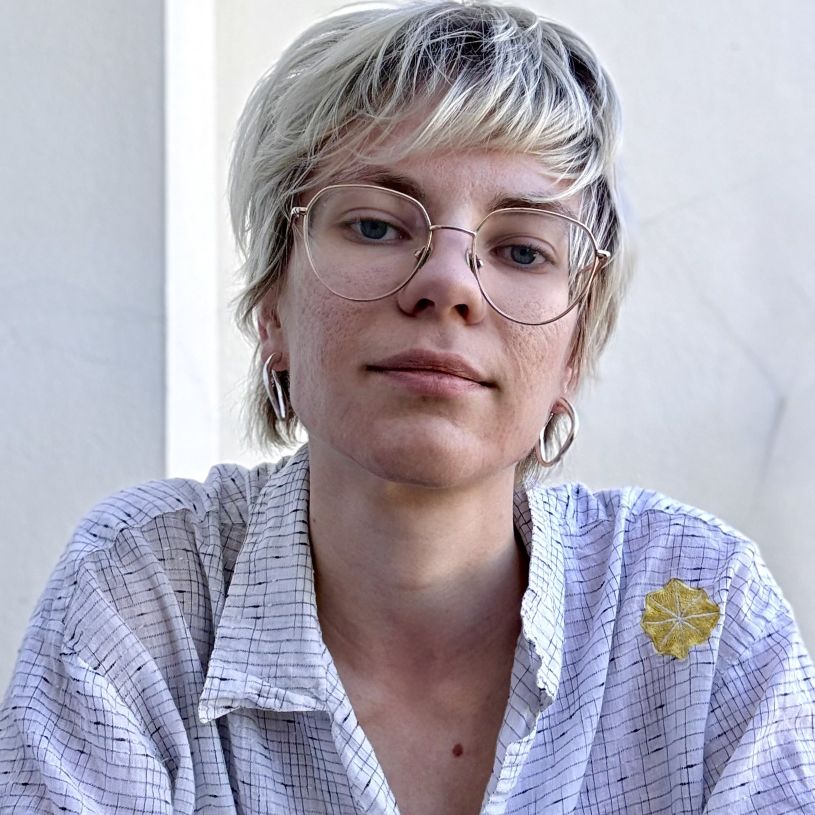
Vlada Malka Pecena is an emerging Jewish writer from Latvia, currently working as a Holocaust researcher and educator. She received her higher education in the UK and is a long-time fan of Cocker Spaniels.