
Translated from the Georgian by Natalia Bukia-Peters and Victoria Field
How to Rescue Poems
Keep them in the Cloud,
it’s a safe place to store them,
says my friend,
a connoisseur of many losses.
I think about the one
who’ll write the final poem
and about that last reader
when the sun goes down.
I think about the one
who’ll come across the rescued poems,
securely hidden in the folder
we entrusted to Clouds.
I think about the one
who’ll be the first to write a poem afterwards,
who’ll gather the voices,
who’ll tell them they don’t repeat anyone else.
I think about poetry,
for which a new era will begin,
another seemingly endless story will start,
with new rhymes, music and architecture,
from, who knows, pen or keyboard.
Or perhaps,
the poem no longer needs all this.
Or perhaps,
no more poetry will be written.
Google It
‘I’ uttered itself in a loud voice, first person pronouns started humming – Malkhaz Kharbedia, ‘The fictional ‘I’- the writer and autobiography’
It’s easy,
enter my first and last name
in the Google search box.
I’ll admit to you, I too have tried
to search for myself
and I don’t think
it’s at all awkward
to know
how you come across
when you’re being sought or searched for.
Google it.
I am:
someone who graduated, works, writes, publishes or was published,
was translated or translates, read, convened, spoke,
travelled, possesses, was nominated, received, brings, builds…
A photo is attached, video or audio evidence.
Information in other languages is meagre.
I am often searched for in Georgian,
which is why I advise only looking for me in poems.
There they will find:
that they hurt me,
that I forgot them,
that I broke things,
that I could bear them,
that I no longer love –
those tears, now dried.
Without a Word
It was words that created divisions in the first place – Mark Strand
This is my best poem,
here are all the words
which I had to say but didn’t write.
This is the poem
you’ll forget as soon you read it
and not even its title will enter your memory.
It’s an asylum
for all the homeless words.
The lines are disposable.
Music abandoned the words
and there’s only an echo.
Here are all the words
I’ve found and lost.
It’s a poem without words,
a first-class thing to say.
It was pollinated by second-class thoughts
and was hidden between the lines.
If you trip over them
or come across them somewhere,
don’t return them to me –
they go to the addressee.
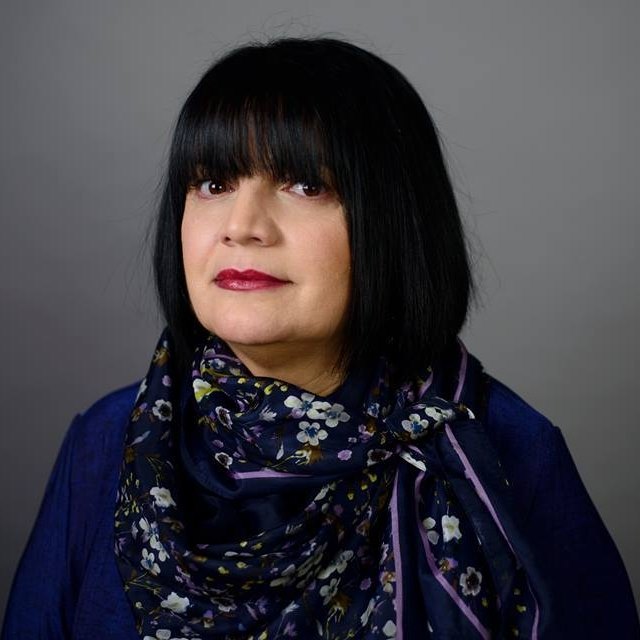
Nato Ingorokva is a Georgian poet, translator, and the author of eight poetry collections. Her poems have appeared in English, French, Spanish, German, Ukrainian, Lithuanian, Belarusian, Armenian languages. She is the Chief Editor of the journal Teacher and mastsavlebeli.ge. Holding a PhD in Social Sciences, she also teaches media literacy and critical thinking at Ilia State University.
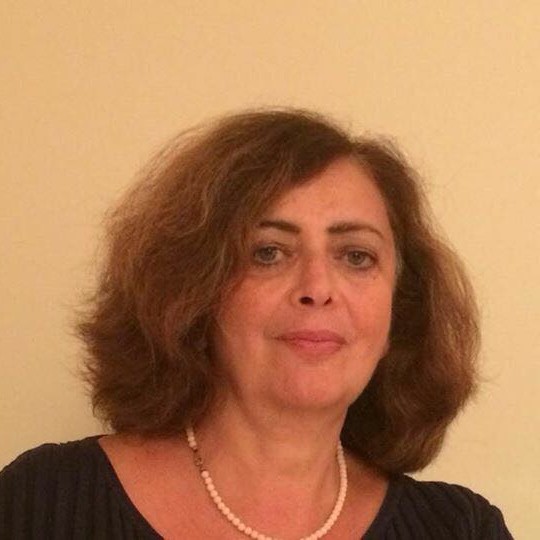
Natalia Bukia-Peters is a freelance translator, interpreter and teacher of Georgian and Russian. She is a member of the Chartered Institute of Linguists in London and has worked collaboratively with the Poetry Translation Centre since 2013. Recent publications include Diana Anphimiadi’s ‘Why I No Longer Write Poems’ with Jean Sprackland, and Lia Sturua’s ‘On the Contrary’, with Victoria Field.
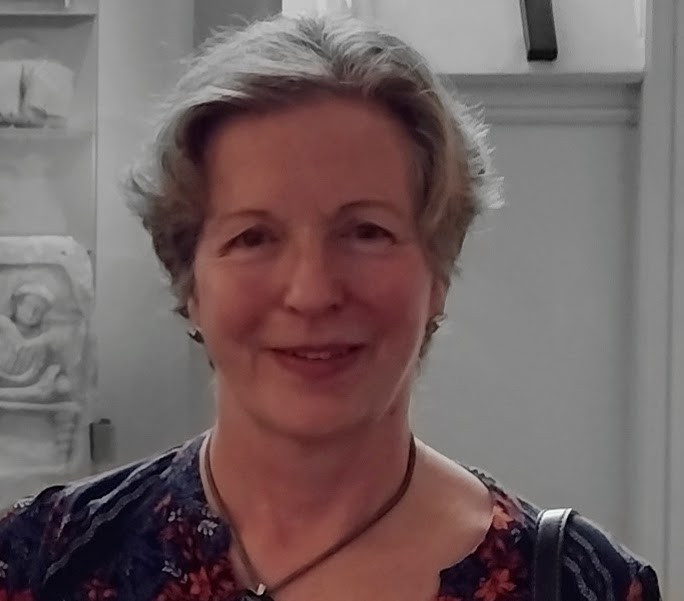
Victoria Field’s latest poetry collection is ‘A Speech of Birds’ from Francis Boutle Publishers. She is an award-winning writer of poetry, fiction, drama and memoir. Her co-translation with Natalia Bukia-Peters of ‘On the Contrary’ by Lia Sturua won the 2024 Sarah Maguire Prize for Poetry in Translation. She is a poetry therapist and teaches at Canterbury Christ Church University.